

Quick answer
What to pack for paddle boarding at Copacabana Beach includes reef-safe sunscreen (SPF 50+), a coiled ankle leash, a waterproof dry bag, at least one liter of water, and a rashguard or UV shirt. The beach offers free access daily from sunrise to midnight, with calm conditions between 5:00 and 7:00 AM before the wind picks up and before the midday sun intensifies.
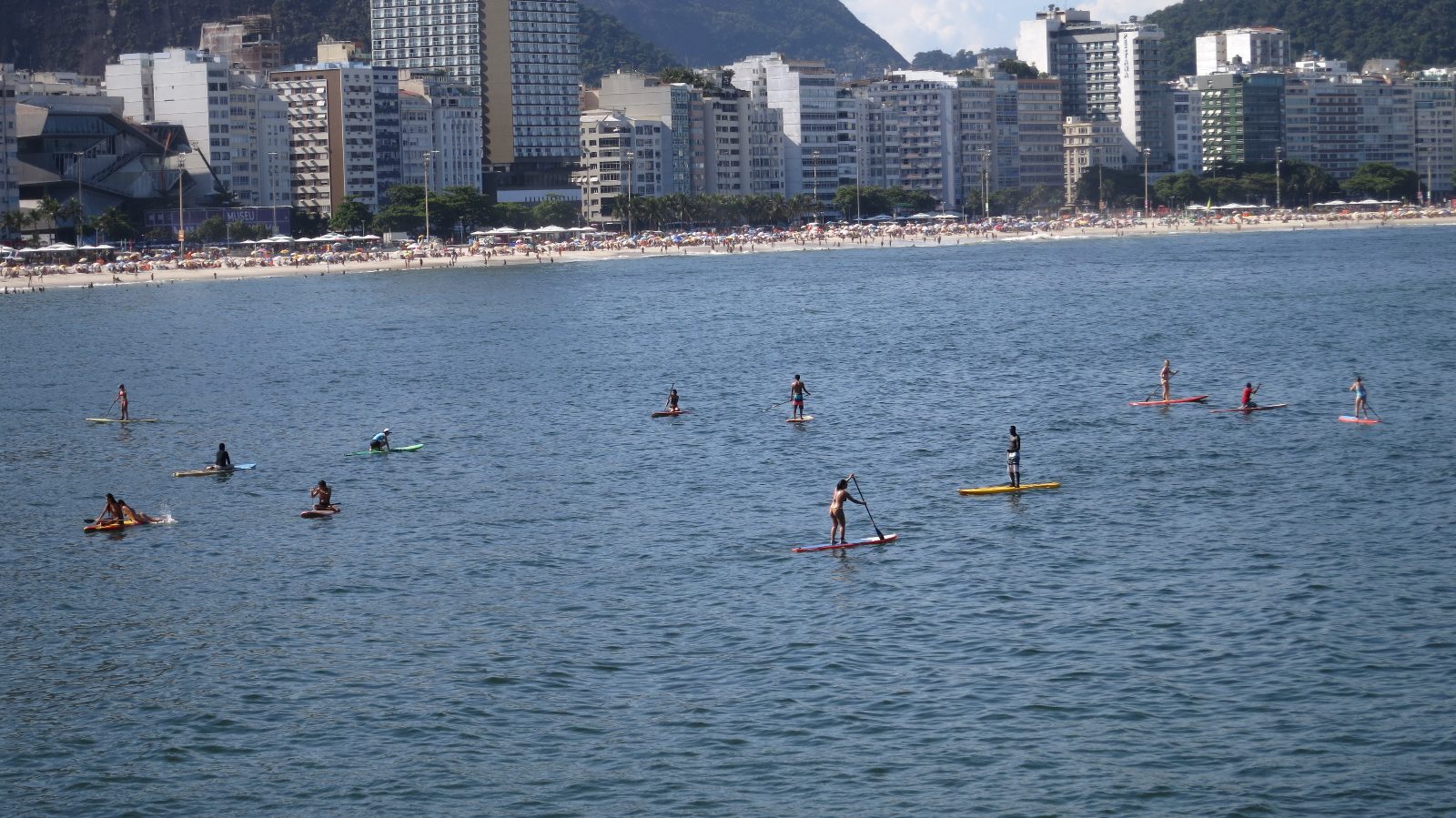
Copacabana's shoreline stretches 3.5 kilometers along the Atlantic, where consistent swells and afternoon wind gusts create conditions that shift dramatically between dawn and midday. The water temperature hovers between 22°C and 26°C year-round, warm enough to paddle without a wetsuit but exposed enough to demand full sun protection. Sun exposure on the water doubles your UV intake compared to the beach itself. A broad-spectrum, reef-safe sunscreen rated SPF 50 or higher is non-negotiable, reapplied every 90 minutes. A long-sleeve rashguard or lightweight UV shirt covers your torso and eliminates the constant reapplication cycle. A wide-brimmed hat with a chin strap stays secure in the coastal breeze. Polarized sunglasses with a retention strap protect your eyes from the glare off the water and prevent losing them during a fall. A coiled ankle leash keeps your board within reach if you fall and prevents it from becoming a hazard to other swimmers or surfers. Copacabana's beach patrol enforces leash requirements during busy periods. A waterproof dry bag rated IPX7 or higher, sized 10 to 20 liters, secures your phone, car keys, and towel. Clip it to your board's deck rigging or wear it as a waist pack. Hydration is the most overlooked essential when preparing for paddle boarding. Bring at least one liter of water in a sealed, insulated bottle. The combination of physical exertion, reflected heat, and salt spray dehydrates you faster than you realize. A small waterproof pouch for emergency cash and identification completes your setup. Copacabana has no facilities on the water itself, and beach vendors operate on cash only. The beach's free access and extended schedule make early morning the strategic window for paddle boarding. Arriving between 5:00 and 7:00 AM means calm water, light winds, and fewer swimmers in your path. By 10:00 AM, the offshore breeze strengthens and the beach fills with weekend crowds.
“Sun exposure on the water doubles your UV intake compared to the beach itself.”
The Best Time and Weather Conditions to Pack for Paddle Boarding
The best arrival window is 05:00–07:00, when calm water and light winds provide optimal conditions for paddle boarding at sunrise. These early conditions minimize the need for heavy gear, allowing you to focus on stability and light apparel.
Summer (Dec–Feb)
High crowds25°C to 35°C; humid
Warmest months require sun protection and hydration packs.
Winter (Jun–Aug)
Moderate crowds18°C to 25°C; breezy
Cooler mornings may necessitate a thin rash guard or neoprene top.
Weekday mornings
Minimal activity—
Calm water facilitates easier balance and less physical exertion on the board.
Verdict: For the most stable conditions, target the 05:00–07:00 window during the milder months of April or October.
What to Pack for Paddle Boarding: A Essential Gear Checklist
Copacabana Beach requires no ticket, but bringing the right gear ensures safety and comfort on the water.
-
Bring a board leash — Keeps your board attached in choppy conditions and prevents it from drifting away.
-
Pack reef-safe SPF 50+ sunscreen — Rio's tropical sun reflects off the water and can cause rapid burns.
-
Wear a rashguard or UV shirt — Provides constant sun protection without reapplication during long sessions.
-
Carry a personal flotation device — Optional for experienced paddlers, but recommended if venturing beyond the break zone.
-
Bring a dry bag for valuables — Protects phone, keys, and cash from saltwater while you're on the board.
-
Pack drinking water in a sealed bottle — Dehydration happens quickly in heat and humidity, especially during early-morning sessions.
-
Wear water shoes or sandals with straps — Protects feet from hot sand, shells, and rough entry points along the beach.
Etiquette and Rules: What to Pack for Paddle Boarding Safely
Copacabana Beach serves swimmers, surfers, and paddle boarders simultaneously along a narrow corridor. Observing right-of-way and environmental protocols keeps the water safe for everyone.
Do
- Stay seaward of swimmers and avoid the flagged swim zones
- Paddle parallel to shore when crossing crowded sections
- Secure your leash before entering the water
- Yield to surfers riding waves toward shore
- Pack out any trash or gear that falls from your board
- Launch and land away from densely populated sunbathing areas
Don't
- Don't paddle through active swim zones marked by flags
- Don't leave wax, plastic, or food waste on the sand
- Don't block beachgoers when carrying your board across the sand
- Don't ignore lifeguard signals or whistle warnings
- Don't paddle in poor visibility or when advisories are posted
- Don't approach fishing lines or nets near the rocks
Opening Hours for Visiting and What to Pack for Paddle Boarding
Copacabana Beach remains accessible 24 hours a day, allowing visitors to arrive at any time. Please note that paddle boarding availability depends strictly on ocean conditions rather than beach access hours.
| Monday | 00:00–23:59 | |
|---|---|---|
| Tuesday | 00:00–23:59 | |
| Wednesday | 00:00–23:59 | |
| Thursday | 00:00–23:59 | |
| Friday | 00:00–23:59 | |
| Saturday | 00:00–23:59 | |
| Sunday | 00:00–23:59 |
Check availability
Frequently asked questions about what to pack for paddle boarding
Everything you need to know about what to pack for paddle boarding