

Quick answer
Essential paddle boarding accessories for Copacabana Beach include a coiled ankle leash to prevent board loss in currents, a personal flotation device required by Brazilian maritime law for offshore paddling, and a waterproof dry bag for valuables since beach theft remains common. Sun protection—reef-safe SPF 50+ sunscreen, a wide-brimmed hat, and UV-rated rash guard—is non-negotiable under Rio's intense equatorial sun. A whistle attached to your PFD and a basic first-aid kit complete the safety baseline.
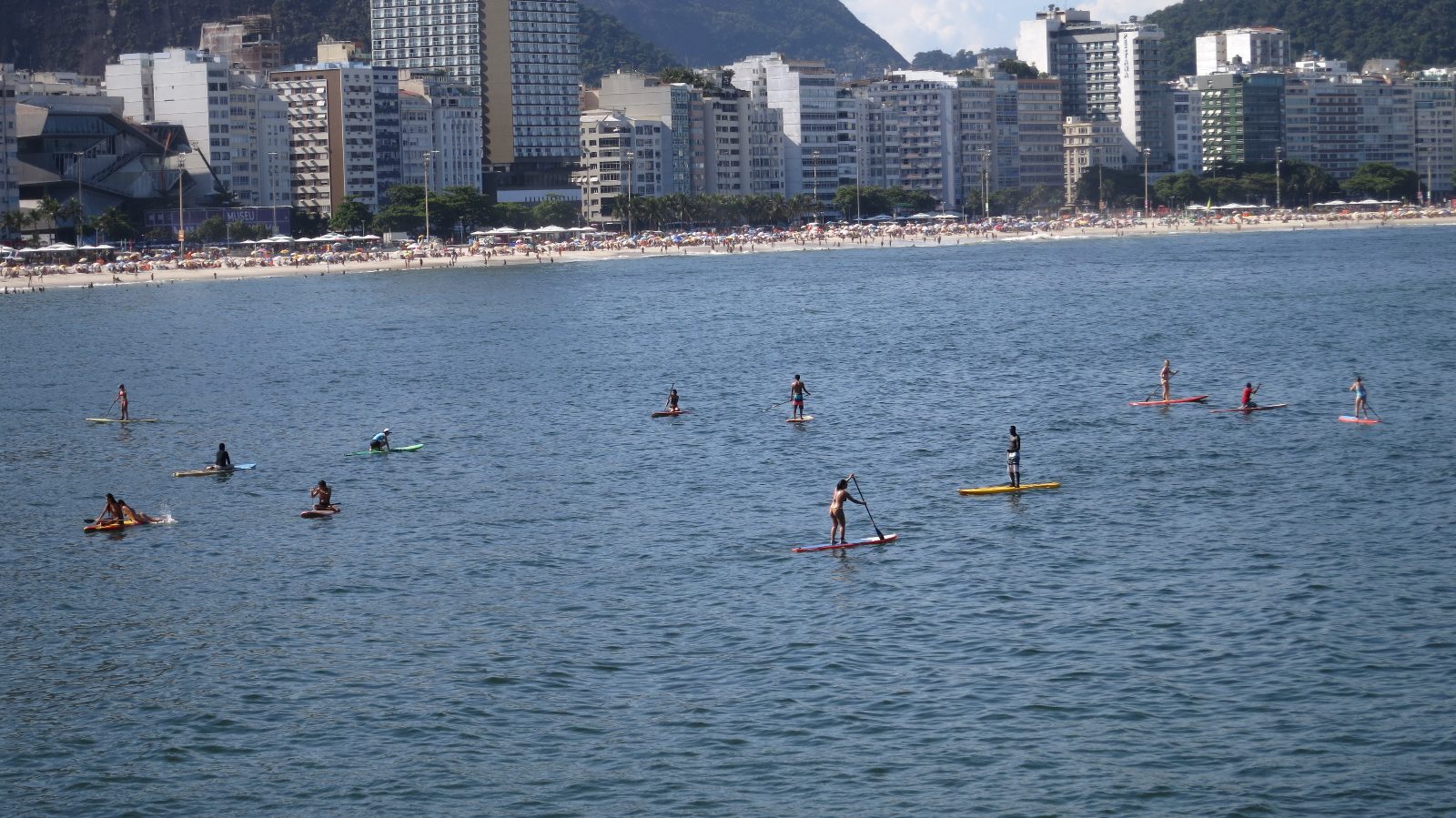
Copacabana's paddle boarding scene operates in a coastal environment that punishes under-preparation. The beach sits exposed to prevailing southeasterly winds that kick up after 10 AM, and the Atlântico Sul current runs parallel to shore at speeds reaching 2 knots during outgoing tides. Losing your board here means watching it drift toward Arpoador or into shipping lanes. A coiled ankle leash rated for surf conditions is the first line of defense. Straight leashes tangle in the Atlantic kelp beds that cluster near the Copacabana Fort breakwater. The leash should measure at least as long as your board—shorter tethers create recoil snapback in waves. Pair it with a comfortable PFD. Brazilian Marinha regulations classify stand-up paddle boards as embarcações when beyond 200 meters from shore, making flotation devices legally mandatory. Inflatable belt-pack PFDs satisfy the requirement without restricting paddle stroke. Copacabana's urban beach setting introduces theft risk absent from more remote paddle spots. Waterproof dry bags—the roll-top models with welded seams—protect phones, keys, and cash during sessions. Stash them in your board's deck bungee rather than leaving valuables on the sand. A secondary accessory often overlooked: a portable hand pump with pressure gauge if you paddle an inflatable SUP. Copacabana lacks equipment rental infrastructure beyond basic board hire, and underinflated boards handle poorly in the beach's choppy conditions. Sun exposure compounds rapidly on open water. Rio's latitude places it within 23 degrees of the equator, and water reflection doubles UV exposure. A long-sleeve rash guard with UPF 50+ rating covers torso and arms without the constant reapplication sunscreen demands. Pair it with a surf hat secured by an adjustable chin strap—visors blow off in Copacabana's afternoon winds. Reef-safe sunscreen formulations without oxybenzone protect both paddlers and the marine environment around the rocky outcrops flanking the beach. A safety whistle, a small drybag-stored first-aid kit with bandages and antiseptic for fin cuts, and a basic waterproof phone case round out the essential accessory list. Copacabana paddle boarding requires no exotic gear, but each item on this list addresses a specific hazard the beach presents. The water is free, the coastline is open, but the accessories are what keep a paddle session safe and functional from launch to return.
“The water is free, the coastline is open, but the accessories are what keep a paddle session safe and functional from launch to return.”
Essential Gear: What Accessories Do You Need for Paddle Boarding at Copacabana?
Paddle boarding in Copacabana's Atlantic waters requires specific safety and sun-protection gear beyond the board itself.
-
Attach a coiled leash to your ankle — Prevents board separation in waves and keeps you connected if you fall
-
Wear a Type III PFD or waist belt — Required for safety in open ocean conditions and strong currents
-
Apply reef-safe SPF 50+ sunscreen — Rio's tropical UV index reaches extreme levels year-round, especially on the water
-
Pack a waterproof dry bag — Protects phone, keys, and cash from saltwater during your session
-
Bring a wide-brimmed hat with chin strap — Shields face and neck from direct sun; strap prevents loss in wind
-
Wear polarized sunglasses with retention cord — Reduces glare off the water and protects eyes from UV reflection
-
Carry a whistle attached to your PFD — Signals for help if you drift too far from shore
When to Plan Your Trip: What Accessories Do You Need for Paddle Boarding at Different Times?
The best arrival window for paddle boarding at Copacabana is 06:00–09:00, which offers calmer water conditions and lower temperatures. Planning your session during these hours reduces the need for heavy sun protection accessories compared to midday.
Early Morning (06:00–09:00)
Minimal crowd density—
The water is calmest during this window, requiring fewer stability-focused accessories. You will experience cooler temperatures, allowing for lighter apparel.
Summer (Dec–Mar)
High tourist volumeHot and humid (25°C–35°C)
Expect heavy beach traffic and warmer water. High-SPF clothing and hydration gear are necessary accessories.
Winter (Jun–Sep)
Moderate crowd levelsMild temperatures (18°C–25°C)
Conditions remain suitable for water sports. A thin neoprene top may be useful if the breeze increases during morning sessions.
Verdict: For the most stable water and temperate conditions, visit between 06:00–09:00 during the months of April or October.
Getting to the Water: What Accessories Do You Need for Paddle Boarding and How to Transport Them?
Copacabana Beach is located along Avenida Atlântica in Rio de Janeiro. The most accessible approach for paddle boarders is via the wide pedestrian walkway that runs parallel to the sand.
Line 1 or 4 to Siqueira Campos or Cardeal Arcoverde station
Multiple lines serving Avenida Atlântica
Direct drop-off at Avenida Atlântica
Beach Access and Costs: What Accessories Do You Need for Paddle Boarding and Is It Free?
Access to the public beach at Copacabana is entirely free of charge for all visitors. Costs associated with paddle boarding relate strictly to the optional rental of equipment or participation in guided sessions.
A typical visitor pays 0 BRL for beach access, with costs only incurred if choosing to rent equipment or hire a professional guide.
Copacabana Beach Opening Hours: What Accessories Do You Need for Paddle Boarding Depending on the Hour?
Copacabana Beach remains open daily, allowing for paddle boarding at any hour. Adjusting your safety accessories is essential when planning sessions during early morning or late night visits.
| monday | 00:00–23:59 | |
|---|---|---|
| tuesday | 00:00–23:59 | |
| wednesday | 00:00–23:59 | |
| thursday | 00:00–23:59 | |
| friday | 00:00–23:59 | |
| saturday | 00:00–23:59 | |
| sunday | 00:00–23:59 |
Check availability
Frequently asked questions about paddle boarding in Copacabana
Everything you need to know about what accessories do you need for paddle boarding